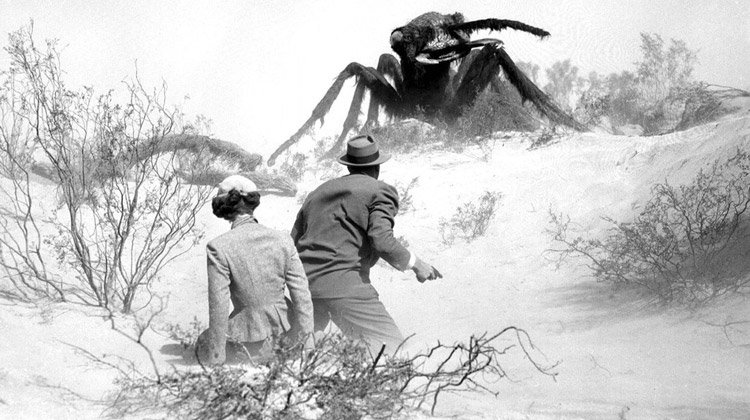
From the monumental horror of atomic-age giants to the endearing pluck of animated heroes, ants have carved a unique niche in the annals of cinema. These tiny titans of the natural world, often overlooked in our daily lives, possess a complex social structure and relentless drive that make them perfect metaphors for everything from societal anxieties to individual heroism. If you’ve ever wondered which films truly capture the essence – or the terror – of the ant, you've landed in the right place. This is The Definitive List of Ant-Themed Movies & Films, a comprehensive dive into the best (and sometimes beastliest) portrayals of our six-legged neighbors on the big screen.
We're going beyond simple creature features to explore how these films reflect our deepest fears, our highest ideals, and our constant fascination with the natural world. Get ready to embark on a cinematic journey that's anything but small.
At a Glance: Your Ant-Themed Cinematic Journey
- Ants in Film: A surprisingly diverse genre, ranging from sci-fi horror to animated family adventures.
- Symbolic Power: Ants often represent community, industry, adaptation, menace, or even individuality against conformity.
- Historical Impact: Early films reflected post-war anxieties, while later ones focused on social commentary and empathy.
- Key Themes: Look for explorations of collective intelligence, environmental impact, and the tension between the group and the individual.
- Something for Everyone: Whether you prefer suspense, heartwarming tales, or philosophical sci-fi, there’s an ant movie for you.
Why Ants? A Mini-Evolution of a Cinematic Obsession
Why have filmmakers, from auteurs to animation studios, repeatedly turned their cameras on ants? It's simple: ants are endlessly adaptable as a narrative device. Their collective power, meticulous organization, and sheer numbers make them terrifying antagonists when scaled up, symbolizing an unstoppable force beyond human control. Conversely, their industriousness, cooperative spirit, and often intricate societies make them relatable, even admirable, protagonists, particularly in stories aimed at younger audiences.
They force us to confront questions about our own social structures, our place in the ecosystem, and what it truly means to be a "civilized" species. Whether through their sheer numbers or their unexpected intelligence, ants on screen almost always demand our full attention. For a broader look at cinematic insect encounters, consider exploring Our full guide to ant movies after you’ve explored this definitive list.
The Groundbreakers: Giant Scares and Atomic Age Anxieties (1950s-1970s)
The mid-20th century saw a surge in creature features, often fueled by Cold War paranoia and the nascent fears of nuclear fallout. Ants, with their inherent ability to swarm and overwhelm, proved to be perfect vehicles for these anxieties.
Them! (1954): The Granddaddy of Giant Bugs
- Release: 1954
- Directed by: Gordon Douglas
- Key Players: James Whitmore, Edmund Gwenn, Joan Weldon
- Why It Matters: This film didn't just feature big ants; it defined a subgenre.
Plot Summary: In a tense, post-atomic world, Sergeant Ben Peterson (James Whitmore) stumbles upon a series of bizarre, violent deaths in the New Mexico desert. Enter FBI agent Robert Graham (James Arness) and the sagely scientist Dr. Harold Medford (Edmund Gwenn), who quickly connect the dots: giant, mutated ants, born from atomic radiation, are on the loose. The military is called in, and a frantic search begins to locate and destroy the queen ants and their burgeoning nests before they spread and conquer.
Themes & Impact: Them! is more than just a creature feature; it's a chilling metaphor for post-war anxieties. The giant ants, born of humanity's own destructive power, symbolize the unforeseen and terrifying consequences of nuclear fallout. Their highly organized, strategic prowess highlights the fear of an enemy that is both alien and frighteningly efficient. The film's stark black-and-white cinematography and the unseen terror of the ants' initial attacks created a suspenseful, dread-filled atmosphere that influenced countless monster movies to come. It tapped into a primal fear of nature turning against us, powered by our own hubris.
Phase IV (1974): When Ants Get Smart
- Release: 1974
- Directed by: Saul Bass
- Key Players: Nigel Davenport, Lynne Frederick, Michael Murphy
- Why It Matters: A thinking person's sci-fi horror that flips the script on human supremacy.
Plot Summary: A mysterious cosmic event on Earth seems to trigger an unprecedented evolutionary leap in ant colonies in a remote Arizona desert. These ants, instead of merely reacting, begin to communicate, organize, and strategize with alarming intelligence. Two scientists, Dr. Ernest Hubbs (Nigel Davenport) and James Lesko (Michael Murphy), along with a young woman named Kendra Eldridge (Lynne Frederick), establish a geodesic dome laboratory in the heart of the affected zone to study them. What begins as scientific curiosity quickly devolves into a chilling, suspenseful battle of wits between humans and a rapidly advancing, unified ant superorganism.
Themes & Impact: Directed by the legendary graphic designer Saul Bass (famous for his iconic film title sequences), Phase IV is a visually striking and intellectually stimulating film. It eschews jump scares for a slow-burn sense of dread, forcing viewers to ponder questions about communication, social structure, and the potential for interspecies conflict when another species suddenly outsmarts us. The ants here aren't just big; they are strategic, organized opponents, capable of complex problem-solving and collective action that challenges humanity's perceived dominance. The film's ambiguous ending leaves a profound, unsettling impression, suggesting that humans might not be the apex predators we assume we are.
Empire of the Ants (1977): B-Movie Fun with a Bite
- Release: 1977
- Directed by: Bert I. Gordon
- Key Players: Joan Collins, Robert Lansing, John David Carson
- Why It Matters: A schlocky, yet entertaining, dive into environmental revenge.
Plot Summary: Con artist Marilyn Fryser (Joan Collins) attempts to sell dubious plots in a tropical island housing development. She takes a group of potential investors on a boat tour, only for them to stumble upon a terrifying truth: illegally dumped toxic waste has transformed ordinary ants into enormous, intelligent, and malevolent creatures. These giant ants don't just want to destroy; they seek to control humans through sophisticated pheromone communication, establishing their own twisted hierarchy. The group must fight for survival against the monstrous insects and their sinister intentions.
Themes & Impact: Based on a H.G. Wells short story, Empire of the Ants leans heavily into the environmental horror subgenre. It's a classic example of nature's revenge, where humanity's disregard for the environment (toxic waste) unleashes a monstrous consequence. While often campy, the film highlights the sophisticated social structure of ants and their relentless pursuit of domination, here enhanced by chemical alteration. It’s a fun, if not entirely subtle, reminder that our actions have unforeseen impacts, and sometimes, the smallest creatures can rise up to claim their own empire.
The Animated Era: Small Worlds, Big Messages (Late 1990s-2000s)
The advent of computer animation in the late 20th century opened up new possibilities for depicting the intricate world of insects. These films often explored more nuanced themes, using ants as a lens to discuss society, individuality, and empathy.
A Bug's Life (1998): A Testament to Community
- Release: 1998
- Directed by: John Lasseter, Andrew Stanton
- Key Players: Dave Foley, Kevin Spacey, Julia Louis-Dreyfus, Hayden Panettiere
- Why It Matters: Pixar's take on ants is a heartwarming tale of underdog triumph and collective strength.
Plot Summary: Flik (Dave Foley) is an inventive but clumsy ant in a colony constantly oppressed by a gang of demanding grasshoppers led by the menacing Hopper (Kevin Spacey). When Flik accidentally destroys the food offering vital for Hopper, the grasshopper leader demands double. Desperate to save his colony from starvation and oppression, Flik journeys to the "city" to recruit warrior bugs. He mistakenly returns with a band of bumbling circus insects, leading to a series of comedic misadventures, but ultimately revealing the true strength that lies in unity, cleverness, and self-belief.
Themes & Impact: A Bug's Life beautifully depicts ants as resilient and industrious, emphasizing their collaborative spirit and tight-knit community. The film masterfully uses the ants' collective power as a symbol of perseverance and unity against a larger, more threatening force. It champions the idea that even the smallest individuals can make a huge difference when they work together and believe in themselves. Beyond its engaging story, it teaches valuable lessons about standing up to bullies, finding strength in unexpected places, and the power of innovation. It's a classic Pixar film, filled with humor, heart, and stunning animation.
Antz (1998): Individuality in the Collective
- Release: 1998
- Directed by: Eric Darnell, Tim Johnson
- Key Players: Woody Allen, Sharon Stone, Gene Hackman, Sylvester Stallone
- Why It Matters: A more cynical, yet thoughtful, exploration of identity within a highly structured society.
Plot Summary: Z (voiced by Woody Allen), an average, neurotic worker ant, feels insignificant in his rigidly hierarchical colony, longing for something more than his predetermined lot in life. He falls for Princess Bala (Sharon Stone), leading him to swap places with his soldier friend Weaver (Sylvester Stallone) and inadvertently become entangled in General Mandible's (Gene Hackman) sinister plot to drown the worker class and create a "perfect" colony. Z, questioning the colony's strict conformity, embarks on a quest for freedom, love, and self-discovery, challenging the very notion of what it means to be an ant.
Themes & Impact: Released the same year as A Bug's Life, Antz offers a starkly different, more adult perspective on ant society. It delves into profound themes of individuality versus the collective good, personal freedom versus societal expectation, and class struggle. The film portrays ants as hardworking and loyal, yet also capable of independent thought and deep emotional complexity. Z's journey is a powerful allegory for questioning authority and finding one's unique purpose, even when it means disrupting the established order. It's a sharp, witty, and surprisingly philosophical animated film that stays with you long after the credits roll.
The Ant Bully (2006): Empathy, Teamwork, and a Change of Perspective
- Release: 2006
- Directed by: John A. Davis
- Key Players: Zach Tyler Eisen, Julia Roberts, Meryl Streep, Nicolas Cage, Paul Giamatti
- Why It Matters: A charming story about seeing the world through someone else's, or rather, some ant's, eyes.
Plot Summary: Lucas Nickle (voiced by Zach Tyler Eisen) is a lonely, picked-on boy who takes out his frustrations on the ant hill in his front yard. The ants, fed up with his destructive behavior, decide to take matters into their own hands. A wizard ant, Zoc (Nicolas Cage), creates a potion that shrinks Lucas to ant size. Sentenced to live among them until he learns, Lucas is guided by his insect guardians, including the compassionate ant Hova (Julia Roberts). Through living in their world, Lucas discovers the ants' intricate society, their intelligence, their struggles, and their collective harmony, ultimately joining forces with them to combat a menacing exterminator (Paul Giamatti).
Themes & Impact: The Ant Bully is a vibrant, family-friendly film that masterfully explores the transformative journey of a young boy forced to literally walk in an ant's shoes. It champions empathy, teamwork, and respect for all living creatures. The ants are depicted as compassionate, intelligent, and incredibly industrious, teaching Lucas valuable lessons through their intricate society and unwavering dedication to their community. It’s a classic coming-of-age story that uses the microcosm of the ant world to highlight macro lessons about kindness, understanding, and the importance of respecting even the smallest inhabitants of our planet.
Beyond the Colony: Deeper Themes in Ant Cinema
As you've seen, ant-themed films aren't just about insects; they're about us. Here are some recurring themes that make these movies so compelling:
- Community vs. Individuality: This is perhaps the most enduring tension in ant cinema. From Z's struggle in Antz to Flik's unique ideas in A Bug's Life, filmmakers often use the highly collective nature of ants to explore the delicate balance between fitting in and standing out. Is the strength of the group paramount, or does true progress come from the maverick?
- Environmental Warnings: Whether it's the atomic radiation creating giant ants in Them! or the toxic waste empowering them in Empire of the Ants, many films use ants to highlight humanity's impact on the environment. These creatures often serve as nature's vengeful hand, reminding us of the unforeseen consequences of our actions.
- The Power of the Collective: A single ant is easily dismissed, but a colony is an unstoppable force. This idea is central to the horror of films like Phase IV, where synchronized ant behavior becomes truly terrifying, but also to the inspiring unity shown in A Bug's Life. It's a testament to the idea that many small efforts can achieve monumental results.
- Perspective Shifts: Films like The Ant Bully physically miniaturize a human to force a change in perspective. This allows us to see the world from an entirely new, ground-level vantage point, fostering empathy and understanding for creatures we might otherwise disregard.
Picking Your Poison: Which Ant Movie is Right for You?
With such a diverse range, how do you choose your next ant-themed movie night?
- If you love classic sci-fi horror and Cold War paranoia: You must watch Them! It set the standard for giant monster movies and still holds up as a tense thriller. For a more cerebral, unsettling experience with psychological depth, Phase IV is your pick.
- If you're into animated adventures with heart and humor: A Bug's Life is a timeless Pixar gem perfect for families, celebrating teamwork and ingenuity.
- If you prefer thought-provoking, existential thrillers with social commentary: Antz offers a sophisticated, adult-oriented animated experience that delves into deep philosophical questions about identity and society.
- If you're looking for a family-friendly film about empathy and growth: The Ant Bully provides a charming narrative about understanding and respect, seen through a child's eyes (and ant's perspective).
- If you're in the mood for some classic B-movie creature feature fun: Empire of the Ants delivers on the promise of giant insects and environmental retribution, best enjoyed with a sense of humor.
Each of these films, in its own way, contributes to the rich tapestry of ant-themed cinema, proving that even the smallest creatures can inspire the biggest stories.
The Future of Ant Films: What's Next?
While no major blockbusters focusing squarely on ants are currently dominating the cinematic landscape, the themes these films explore are evergreen. As our understanding of insect intelligence grows, and as environmental concerns become more pressing, it's highly probable that new filmmakers will continue to turn to ants. Perhaps we'll see more sophisticated explorations of ant communication, truly alien perspectives of their complex societies, or even a return to the sheer terror of their collective power with modern CGI.
The enduring allure of the ant lies in its dual nature: both a symbol of industrious harmony and a harbinger of overwhelming, relentless force.
Final Thoughts: The Enduring Allure of the Ant
From the chilling dread of giant, mutated creatures to the heartwarming tales of plucky animated heroes, ant-themed movies continue to captivate audiences. They offer more than just entertainment; they provide a mirror to our own societies, fears, and aspirations. These films remind us that even the smallest beings can possess immense power, intricate social structures, and complex stories worth telling.
Whether you're revisiting a classic or discovering a new favorite from this definitive list, we hope you'll find a fresh appreciation for the cinematic world of ants. So grab some popcorn, settle in, and prepare to be amazed by the incredible stories that unfold when filmmakers decide to look a little closer at the ground beneath our feet.