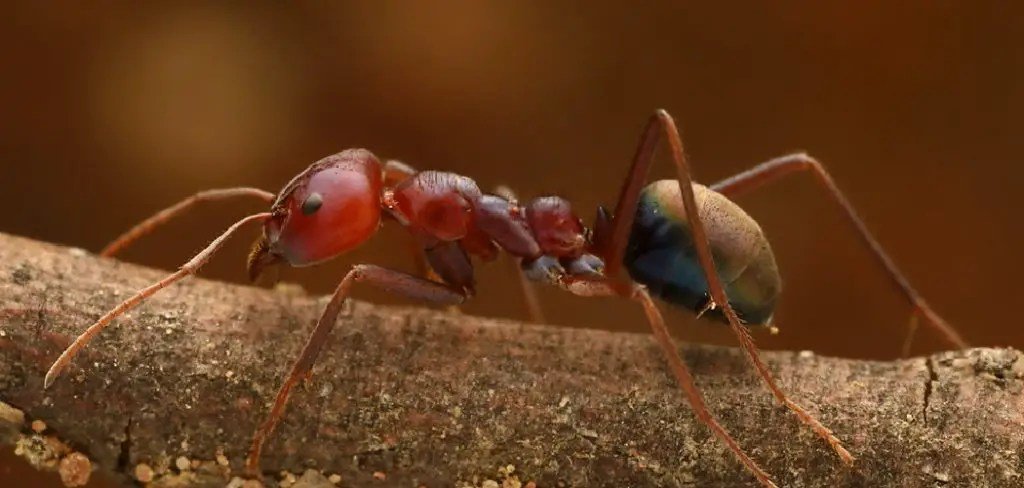
When you peel back the layers of our cinematic imagination, you find something truly fascinating crawling beneath the surface: ants. These tiny, industrious creatures, often dismissed as mere pests, have long served as powerful allegories in film, offering profound insights into Themes and Symbolism: What Ant Movies Tell Us About Society. Far from simple creature features, these films often reflect our deepest anxieties, our most cherished ideals, and the complex structures that govern human existence.
From utopian visions of collective harmony to chilling tales of mutated terror, ant movies are surprisingly versatile mirrors. They allow us to project our concerns about individuality versus conformity, environmental responsibility, the dangers of unchecked power, and the very nature of intelligence onto a canvas of six-legged protagonists and antagonists. They make the invisible workings of society visible, scaled down to a manageable, yet deeply impactful, size.
At a Glance: What Ant Movies Unpack About Us
- The Individual vs. The Collective: Many ant films explore the tension between personal freedom and societal roles, particularly within rigid hierarchies.
- Societal Critique & Revolution: They often challenge existing power structures, depicting class struggle, fascism, and the potential for worker-led change.
- Environmental Warnings: Giant, mutated ants frequently symbolize the consequences of human exploitation of nature and the fears of unchecked scientific advancement.
- Fear of the "Other": Ant films can tap into xenophobia and the primal dread of an organized, alien intelligence.
- Empathy and Perspective: Some narratives invite us to literally or figuratively shrink down, fostering understanding and respect for different forms of life and social structures.
- The Power of Unity: Whether for good or ill, the collective strength and organization of ants are almost always a central thematic element.
Beyond the Crawl: Why Ants Captivate Our Collective Imagination
Ants, in their natural state, are marvels of organization. They live in highly complex societies, with specialized roles, intricate communication systems, and an unwavering commitment to the colony's survival. These inherent qualities make them a perfect blank slate for human projection, a natural metaphor for our own social constructs. We see in them echoes of our bustling cities, our labor divisions, and our aspirations for community.
This inherent symbolism, coupled with their sheer numbers and often unseen industriousness, has made them a rich source for storytelling across genres. It's why filmmakers return to them again and again, utilizing their inherent traits to explore everything from utopian ideals to dystopian nightmares. Indeed, if you delve into what ants symbolize in popular culture, you'll find a wide spectrum of meanings, all rooted in these fascinating biological realities.
The Blueprint of Society: Hierarchy, Conformity, and Revolution (Antz)
Let's begin with a film that laid bare the raw nerves of societal critique with startling clarity: DreamWorks' 1998 animated feature, Antz. Featuring an all-star voice cast led by Woody Allen as Z, a neurotic worker ant, this film is arguably one of the most direct cinematic explorations of class struggle and the individual's fight against an oppressive system.
Antz paints a stark picture of a rigidly stratified society where every ant's life is predetermined from birth. Z, a mere "individual of no consequence," feels suffocated by the endless, monotonous toil of digging. His journey begins as a cynical quest for personal connection and meaning, specifically with Princess Bala (Sharon Stone), who represents a world beyond his caste. This initial romantic pursuit quickly propels him into a larger narrative of revolution.
General Mandible (Gene Hackman) embodies the dangers of authoritarianism and ethnonationalism. His grand scheme—a war against termites designed as a pyrrhic victory to eliminate queen-loyal soldiers and stage a coup—is a chillingly familiar blueprint for dictators throughout history. Mandible’s vision is a "perfect" society built on strength and genetic purity, where workers are expendable, a stark parallel to fascist ideologies.
The film's most striking moments come when Z, through a series of accidental heroics and genuine disillusionment, incites a worker uprising. The rallying cry, "The workers control the means of production!" is not subtle. It’s a direct, almost verbatim, echo of Marxist ideology, painting Antz as a potent piece of Marxist themes prevalent in Antz. The workers' general strike, their collective refusal to continue digging, is a powerful visual representation of their essential role in the colony's functioning – and thus, their power. Supervisors are explicitly called "pawns of the oppressor," leaving no doubt about the film's allegorical intent.
Even the ending, where workers unite to save themselves from Mandible's genocidal flood plan, showcases a profound shift in class consciousness. Z realizes that true power isn't about individual glory, but about the united, collective action of the working class. Colonel Cutter's defection, driven by a moral awakening to Mandible's atrocities, further highlights the film's moral compass. While the exact governance of the "new" colony is ambiguous, the implication is clear: a society re-forged on principles of solidarity and mutual aid, challenging the very foundations of inherited hierarchy. The comparison to Soviet propaganda films like Battleship Potemkin (1905) isn't hyperbole; Antz leverages similar narrative devices to inspire a sense of collective empowerment against oppressive forces.
A United Front: Collaboration, Community, and Challenging the Status Quo (A Bug's Life)
Released in the same year as Antz, Pixar's A Bug's Life offers a more family-friendly, yet equally compelling, take on similar themes of community and resistance. While Antz delves into the gritty complexities of internal class struggle, A Bug's Life focuses on external oppression and the power of unity against a common foe.
Flik, an inventive but clumsy worker ant, embodies the spirit of innovation often stifled by tradition and fear. His accidental destruction of the food offering for the tyrannical grasshopper Hopper (Kevin Spacey) sets in motion a chain of events that forces the colony to confront its subjugation. The grasshoppers are the clear oppressors, leveraging fear and brute force to exploit the ants' labor. Hopper's chilling line, "You let one ant stand up to us, then they all might stand up," perfectly encapsulates the fear of collective action that rulers often harbor.
A Bug's Life champions the idea that even the smallest individuals, when united, possess immense power. Flik's journey to recruit "warrior bugs" (who turn out to be a circus troupe) is a testament to perseverance and the importance of looking beyond conventional solutions. The film's ultimate message is one of collaboration, courage, and the triumph of the underdog. It teaches that true strength lies not in physical might, but in an unbreakable spirit of community and the conviction that "tiny individuals can make a big difference." The ants learn to overcome their fear, challenge their oppressors, and collectively build a better future, emphasizing the strength found in their tight-knit society.
The Monster in the Colony: Fear, Mutation, and Nature's Revenge (Them!, Empire of the Ants)
Moving from social commentary to pure primal fear, ant movies have also masterfully tapped into our anxieties about nature, science, and the unknown. Two classic examples stand out: Them! (1954) and Empire of the Ants (1977).
Them!, a seminal monster film, premiered in the wake of atomic bombs and the dawn of the Cold War. It features giant, mutated ants, born from atomic radiation, as the primary antagonists. This film brilliantly plays on the burgeoning post-war anxieties in sci-fi cinema. The giant ants symbolize not just nature's unbridled power, but specifically the terrifying, unpredictable consequences of humanity's tampering with forces it doesn't fully understand. The nuclear age brought with it the fear of invisible threats, unstoppable forces, and mutations that could unravel the natural order. Them! capitalizes on this, using the ants' natural organization and survival instincts, amplified to monstrous proportions, to represent an existential threat that only collective human ingenuity and military force can hope to combat. It’s a classic cautionary tale wrapped in a thrilling creature feature.
Decades later, Empire of the Ants shifts the focus from nuclear fallout to environmental contamination. Directed by B-movie maestro Bert I. Gordon and starring Joan Collins, this film features chemically altered ants that grow to enormous sizes after being exposed to illegally dumped toxic waste. Here, the giant ants are not merely a product of accidental mutation but a direct consequence of human greed and disregard for the environment. They represent nature striking back, not just as an unthinking force, but as malevolent intelligence. These ants even learn to control humans through pheromones, adding another layer of unsettling power dynamics. Empire of the Ants thus becomes a grim parable, one of many critical environmental warnings in film, about humanity's destructive impact on the planet and the potential for nature to turn our own hubris against us.
The Next Frontier: Intelligence, Interspecies Communication, and Evolution (Phase IV)
What if ants weren't just a force of nature, or a mirror for our societies, but an evolving intelligence challenging human supremacy? Saul Bass's visually stunning 1974 film, Phase IV, explores this chilling premise.
In Phase IV, ants in the Arizona desert undergo a rapid and unexplained evolutionary leap, developing heightened intelligence, communication, and a unified purpose. They begin to actively target human settlements and eventually focus on a remote scientific lab. The film isn't about giant monsters, but about the unsettling rise of a different, potentially superior, intelligence. The conflict isn't just physical; it's intellectual and existential. Scientists struggle to understand the ants' complex signals and strategies, highlighting humanity's arrogance in assuming its own intellectual monopoly.
Phase IV probes deep questions about communication, social structure, and interspecies conflict. It challenges the anthropocentric view of the world, forcing us to consider what it means for another species to evolve beyond our understanding, and potentially, beyond our control. The film's ambiguous, unsettling ending leaves a lasting impression, suggesting a new, terrifying phase of co-existence or dominance. It contributes significantly to the broader discussion on AI and evolutionary themes in cinema, using the humble ant as a vehicle for profound philosophical inquiry into our place in the natural (and unnatural) order.
Learning from the Small: Empathy, Growth, and Perspective (The Ant Bully)
While many ant films lean into societal critique or horror, The Ant Bully (2006) offers a more tender, educational perspective. This animated feature tells the story of Lucas Nickle, a young boy who bullies ants for sport. In retaliation, the ants shrink him to their size, sentencing him to live among them to learn a lesson.
This premise provides a unique opportunity for empathy. By literally shrinking Lucas and forcing him to experience life from an ant's perspective, the film challenges human-centric biases. Lucas learns firsthand about the ants' collaborative spirit, their diligence, their intelligence, and their capacity for compassion. He discovers that these seemingly insignificant creatures have a rich, complex society and that his actions have real, devastating consequences.
The film teaches Lucas—and by extension, the audience—about the importance of empathy, teamwork, and respect for all living creatures. It highlights the value of collective effort over individual aggression and demonstrates that "small" problems can have "big" solutions when tackled together. The Ant Bully serves as a gentle yet effective reminder of our interconnectedness with nature and the ethical responsibilities that come with our dominant position in the ecosystem. It's a journey of transformation, proving that a change in perspective can lead to profound personal growth.
What Our Ant Obsession Reveals: A Societal Mirror
When we look across this diverse landscape of ant films, a clear pattern emerges: these movies don't just entertain; they articulate our deepest societal concerns.
They are a sounding board for our anxieties about control and conformity in an increasingly structured world, as seen in Antz's indictment of rigid hierarchies. They reassure us about the power of community and collective action to overcome oppression, a central theme in A Bug's Life. They channel our fears of scientific overreach and environmental degradation, giving tangible form to abstract threats in Them! and Empire of the Ants. They force us to confront our intellectual arrogance and the potential for other intelligences to emerge, as dramatically presented in Phase IV. And they gently guide us toward empathy and respect for the natural world, as charmingly demonstrated in The Ant Bully.
Ants, with their structured societies, relentless work ethic, and ability to thrive in vast numbers, provide a perfect canvas for these complex human narratives. They are both alien and familiar, small enough to feel manageable as a metaphor, yet numerous enough to represent overwhelming forces. Whether we see them as an ideal model for cooperation or a terrifying symbol of an encroaching, dehumanizing collective, ant movies consistently reflect the shifting values, fears, and hopes of the societies that produce them.
Beyond the Anthill: Practical Takeaways for a Human Society
So, what can we, as humans, take away from these cinematic excursions into the world of ants? More than you might imagine.
- Question Authority and Hierarchy: Films like Antz serve as powerful reminders to critically examine power structures within our own societies. Are roles truly equitable? Are leaders serving the collective good, or their own ambition? The worker's strike in Antz underscores the fundamental power held by labor, a lesson relevant in any discussion of economic and social justice.
- Embrace the Power of Collective Action: Whether it's standing up to an oppressor like Hopper or building an ant-ladder to escape a flood, these movies consistently highlight that seemingly insurmountable challenges can be overcome when individuals unite for a common cause. This applies to community organizing, social movements, and even workplace collaboration.
- Respect Our Environment and Its Consequences: The cautionary tales of mutated ants in Them! and Empire of the Ants are stark warnings about the profound and often unforeseen consequences of human actions on the environment. They urge us to consider our ecological footprint and the long-term impact of pollution and resource exploitation.
- Cultivate Empathy and Perspective: The Ant Bully teaches us the invaluable lesson of walking (or crawling) in someone else's shoes. In a diverse world, the ability to understand and respect perspectives different from our own is crucial for harmonious co-existence. It encourages us to look beyond superficial differences and recognize shared struggles and aspirations.
- Be Open to Evolving Intelligence: Phase IV prompts us to consider our place in an ever-evolving world. As artificial intelligence and other forms of advanced cognition emerge, the film subtly encourages us to approach these developments with a blend of scientific curiosity and ethical caution, rather than assuming human supremacy.
Ultimately, delving into the themes and symbolism of ant movies is an exercise in self-reflection. They offer a unique lens through which to examine our own social contracts, our relationship with nature, and the continuous struggle between individual freedom and collective responsibility. If you're keen to explore more fascinating cinematic portrayals of these remarkable insects and their often profound messages, you might enjoy diving into a complete guide to ant movies.
The Unseen Threads: Continuing the Conversation
From the bustling, regimented ranks of Antz to the terrifying, intelligent hordes of Phase IV, ant movies serve as a potent reminder that even the smallest creatures can carry the weight of our biggest ideas. They've consistently adapted to reflect the changing tides of human concerns, proving themselves to be far more than mere creature features. So the next time you see an ant scuttling by, consider the complex societies they represent, the powerful stories they've inspired, and what those stories, in turn, reveal about us.